Generating New Torsions with OpenFF Bespoke
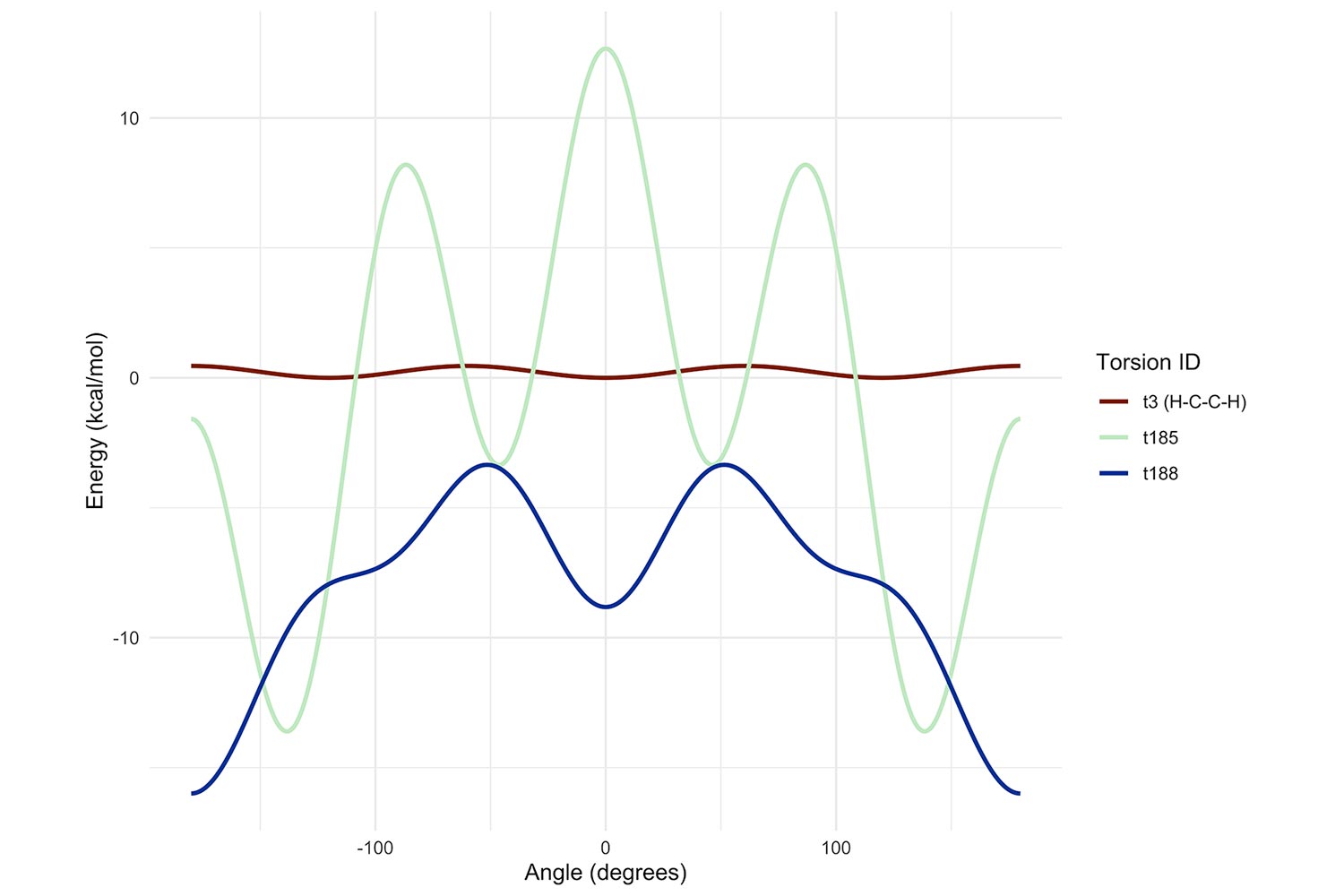
In the polymer parameterization process, OpenFF Bespoke plays a pivotal role in defining new torsional parameters that greatly enhance the accuracy of molecular simulations. As illustrated in the figures above (shown for the polyethylene (PE) system), new torsional parameters were introduced using more intricate SMIRKS strings compared to those typically employed in conventional parameterization. This added complexity enables a more precise and tailored application of torsional parameters, specific to the unique properties of the polymer under investigation.
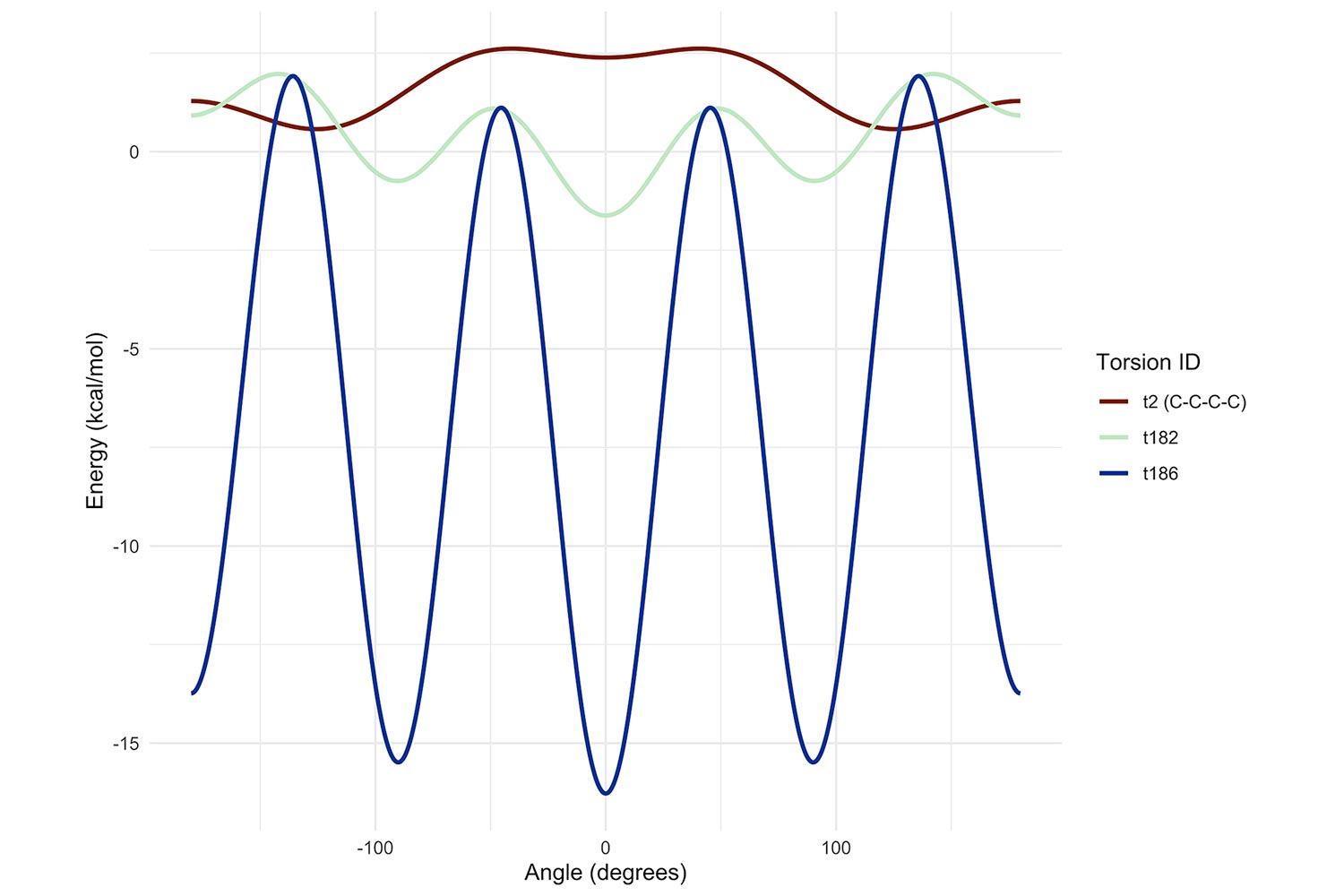
Unlike traditional parameterization methods, which define torsions based solely on the four atoms directly involved in the torsional angle, OpenFF Bespoke adopts a more sophisticated approach. It incorporates the surrounding chemical environment of the selected fragment during the fragmentation process. This expanded context allows for the creation of torsional parameters that more accurately reflect the polymer’s true molecular structure.
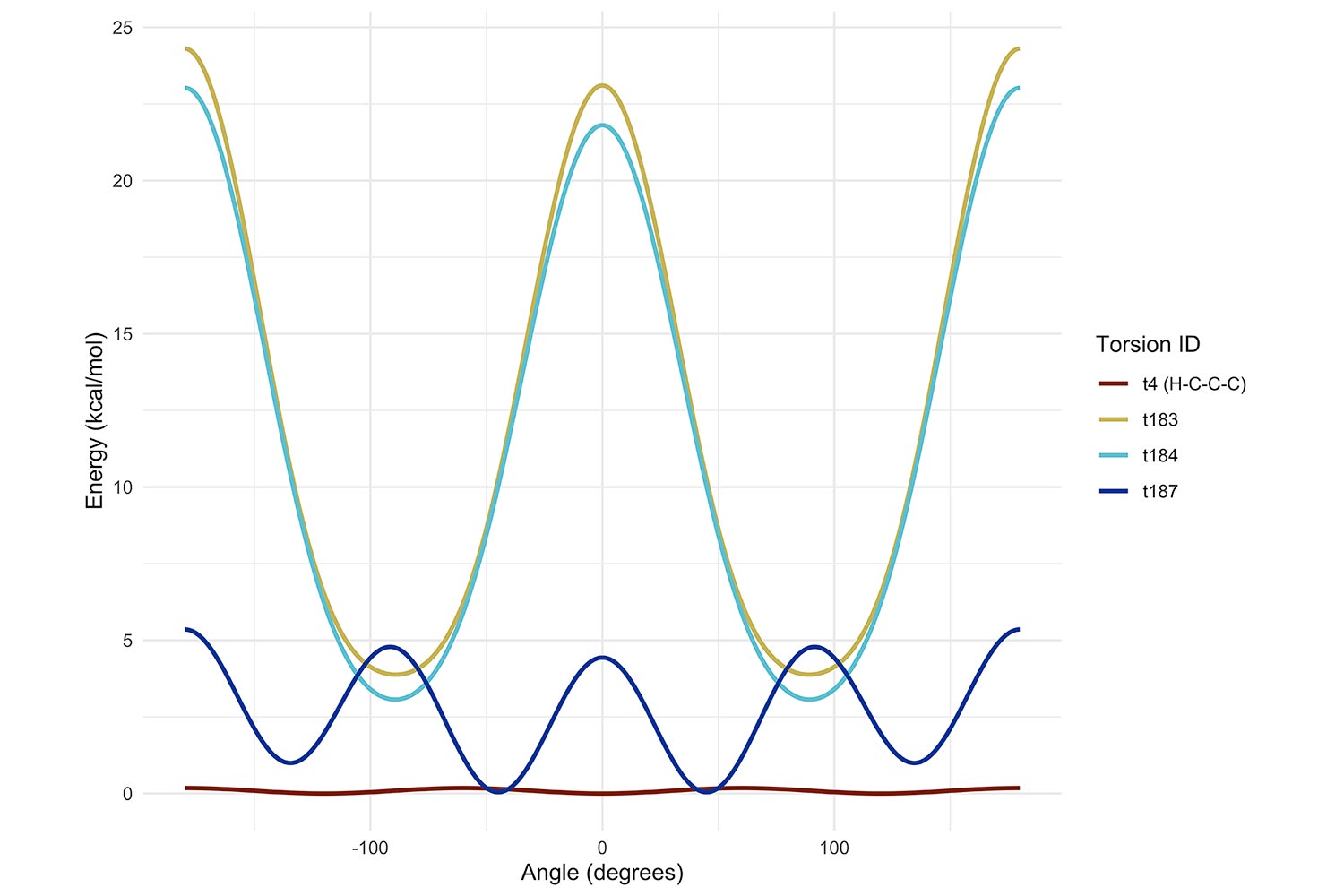
This methodology is especially valuable when simulating complex polymer systems, where standard force field parameterizations may fall short. By enabling the generation of new torsional parameters specific to the polymer’s molecular architecture, OpenFF Bespoke empowers researchers to develop more accurate models. This approach advances the field of computational materials science, offering deeper insights into polymer behavior and expanding the potential for simulating intricate material systems.